
Your first trimester guide
Tips for the first 13 weeks of your pregnancy!
Congratulations – you’re about to be a mother! Becoming a parent is an exciting and rewarding experience, but it can also feel overwhelming at times and you likely have lots of questions. That’s to be expected and we hope this guide will be a useful companion throughout your pregnancy. During the first 13 weeks of pregnancy, your body is growing and changing, and so is your baby’s. Here’s what to know as you start this amazing journey together.
How are you feeling?
Your body is about to undergo some major changes as it prepares to grow a new life.
You may start to experience symptoms such as nausea or fatigue – or you may find that you have an increased level of energy! Listen to your body and make adjustments to your routines as needed. Every woman is different, and so is each pregnancy.
Early signs and symptoms of pregnancy
The earliest sign of pregnancy is a missed period for women who have a regular monthly menstrual cycle. Sometimes, implantation bleeding can occur. This is a bleed very similar to a light period or spotting. Though this is completely normal, you should check with your health-care provider if you experience any bleeding during your pregnancy.
You may also begin experiencing a handful of the symptoms below early on in your pregnancy such as fatigue, nausea or more frequent urination.
Common symptoms
The changes in your hormones during your first weeks of pregnancy affect your whole body. While no two pregnancies are the same, some symptoms you may experience during your first trimester include:
- Breast tenderness
- Extreme changes in mood
- Nausea or vomiting (morning sickness)
- Frequent urination
- Weight gain or loss
- Extreme fatigue
- Headaches
- Heartburn
- Leg cramps
- Lower back and pelvic pain
- Cravings for certain foods
- New dislike of certain foods
- Constipation
Self care
Symptoms in early pregnancy can be uncomfortable to say the least. For some relief, give these tips a try after checking with your health care provider first. Remember, choices should always be made based on your preferences and what is available to you.
- For nausea or vomiting, try ginger, chamomile, vitamin B6 and/or acupuncture.
- For leg cramps, try magnesium or calcium.
- For constipation, if dietary modifications suggested by your health-care provider are not working, wheat bran or other fiber supplements can be used for relief.
Healthy foods and regular exercise are important for your entire pregnancy. Continue your daily physical activity for as long as you feel comfortable doing so. The more active you are during pregnancy, the easier it will be for you to adapt to your changing body. Make sure to nourish your and your baby’s growing bodies with nutritious food. Make sure you are getting adequate energy, protein, vitamins and minerals by eating a variety of healthy foods, including vegetables, meat, beans, nuts, pasteurized dairy and fruit.
How is your baby growing?
This period is the most crucial to your baby’s development. During the first trimester, your baby’s internal systems and body are beginning to take shape. These early organ and bodily developments include:
- Brain and spine
- Inner ear
- Cardiac tissue
- Genitals
- Fingernails
- Liver
- Eyelids
- Pancreas
- Kidneys
- Cartilage for the hands, feet and limbs
- Muscles of the mouth, eyes and nose
- Webbed fingers and toes
- Lungs
Fetal growth can vary significantly for a number of reasons, but during the first trimester, your baby will grow from about 0.64 cm (.25 in) at the end of the first month (smaller than a grain of rice) to around 10 cm (4 in) by the end of week 12 and will weigh around 28 g (1 oz) [Figures from the Cleveland Clinic]. For information for your country, please refer to your ministry of health.
When should I meet with my health-care provider?
You should schedule at least one appointment with your health-care provider during your first 12 weeks of pregnancy, ideally as early as possible. For recommendations in your country, please check with your ministry of health or health provider.
Things to look out for
While all women experience pregnancy differently, you should speak to your health-care provider if you experience:
- Severe cramping
- A fever over 38° C (100° F)
- Odorous vaginal discharge
- Painful urination
- Vaginal bleeding
- Severe vomiting
Your second trimester guide
Tips for weeks 13 to 28 of your pregnancy.
Welcome to your second trimester! Many women find that they have fewer symptoms than in their first trimester. During this stretch of your pregnancy, you may start to see a small baby bump as your womb grows upwards and outwards.
How are you feeling?
Every woman is different, but many expecting mothers feel better during the second trimester than they did during the first. Hopefully, you will start to notice that you are feeling less nauseous and fatigued.
You will start to encounter some new changes like a growing belly and by the time you enter your third trimester, you should start to feel your little one move and kick!
Common symptoms
While no two pregnancies are the same, some symptoms you may experience during your second trimester include:
- Carpal tunnel syndrome — numbness, tingling or weakness in your hand
- A line on your skin running from your belly button to your pubic hairline
- Patches of darker skin on your face
- Lower back and pelvic pain
- Darkening areola
- Stretch marks along your breasts, abdomen, buttocks and thighs
Self care
Though your symptoms should be easing up during the second trimester, you will start to notice bigger changes in your body. To manage some of the aches and pains that may come with these changes, try some of the below methods after checking with your health-care provider first. Remember, choices should always be made based on your preferences and what is available to you.
- For lower back and pelvic pain, regular exercise throughout pregnancy is recommended. There are many different treatment options that can be used as well, such as physiotherapy, support belts and acupuncture.
- For carpal tunnel syndrome, rest, ice and elevate your hand and wrist.
- For stretch marks, if you are going to use a cream, gel or lotion, make sure to do so early on and to massage the product into the marks. It is also important to use the chosen product every day for weeks in a row.
- Healthy foods and regular exercise are key for your second trimester and throughout your pregnancy. Keep up with your regular exercise routine, but do not exhaust yourself. As a general rule, you should be able to hold a conversation while working out. Always consult your health-care provider about exercise during pregnancy. Continue eating a variety of foods to make sure that you are getting adequate energy, protein, vitamins and minerals.
How is your baby growing?
Throughout the second trimester, your baby’s internal organs and bodily functions are developing in a more sophisticated way. During these crucial weeks:
- Bones begin to harden
- Skin starts to thicken
- Toenails form
- Nervous system begins to develop
- Hearing starts to develop
- Part of the brain that controls motor movements is fully formed
- Eyelids can open and close
- Kicks are stronger
- Digestive system is working
- Lungs are fully formed
Fetal growth can vary significantly for a number of reasons, but at the beginning of the second trimester, your baby will be around 10 cm (4 in) and weigh in at around 28 g (1 oz). By the time your second trimester ends, your growing little one will be about 35 cm (14 in) long and weigh from 1 to 2 kg (2 to 4 lbs) [Figures from the Cleveland Clinic]. For more information for your country, please refer to your ministry of health.
When should I meet with my health-care provider?
During your second trimester, you should have one appointment at 20 weeks and another one at 26 weeks. For recommendations in your country, please check with your ministry of health or health provider. Things to look out for
While all women experience pregnancy differently, you should speak to your health-care provider if you experience:
- Severe cramping or abdominal pain
- A fever over 38° C (100° F)
- Vaginal bleeding or fluids
- Sudden or extreme swelling
- Odorous vaginal discharge
- Painful urination
- Severe, persistent headaches
- Vomiting blood
- Shortness of breath
- Heart palpitations
- Blurry vision
Your third trimester guide
Tips for weeks 29 to 40 of your pregnancy.
Congratulations, you have reached the home stretch! You will soon be welcoming a beautiful new member to your family. You may be feeling more tired and uncomfortable in these last weeks, but you have a lot to look forward to!
How are you feeling?
Some of the same discomforts you had in your second trimester will continue. Plus, many women find breathing difficult and notice they have to go to the bathroom even more often. This is because the baby is getting bigger and it is putting more pressure on your organs. Don’t worry, your baby is fine and these problems will lessen once you give birth.
Common symptoms
While no two pregnancies are the same, some symptoms you may experience during your third trimester include:
- Acid reflux (heartburn)
- Haemorrhoids
- Shortness of breath
- Breast tenderness
- Protruding belly button
- Difficulty sleeping
- Swelling in your fingers, face and ankles
Self care
Because your baby is reaching full term, you may feel more uncomfortable during your third trimester than you did during your second. To manage some of the discomfort, try some of the below methods after checking with your health-care provider first. Remember, choices should always be made based on your preferences and what is available to you.
For heartburn, ask your health provider for advice on diet and lifestyle modifications. If these do not help, antacid preparations can be used for troublesome symptoms.
For difficulty sleeping, try using a pillow to support your whole body or just specific areas that need it to help ease tension while you rest.
Healthy foods and regular exercise are important during your third trimester and throughout your pregnancy. Keep up with your regular exercise routine, but do not exhaust yourself. As a general rule, you should be able to hold a conversation while working out. Always consult your health-care provider about exercise during pregnancy. Continue eating a variety of foods to make sure that you are getting adequate energy, protein, vitamins and minerals.
Braxton Hicks (false contractions)
During your third trimester, you will also experience contractions, which can be a sign of real or false labour. “False labour” pains are called Braxton Hicks and are your body’s way of preparing you for actual labour. They may feel similar to menstrual cramps or a tightening in the abdomen.
There is no medical treatment for Braxton Hicks, but there are some things you can due to ease discomfort, including:
- Drinking water
- Changing your position (if you are lying down, try going for a walk, and vice versa)
- Relaxing by taking a nap, reading a book or listening to calming music
If these do not lessen the pain and if you notice your contractions becoming more frequent or intense, contact your health-care provider.
Going into labour
Most women give birth between 38 and 41 weeks of pregnancy, but there is no way to know the exact moment you will go into labour.
When labour begins, the cervix dilates and the muscles of the uterus begin to contract at regular intervals and will get closer together over time. Contractions will feel similar to menstrual cramps, but more intense. As your uterus contracts, you may feel pain in your back or pelvis and your abdomen will become hard. When your uterus relaxes, your abdomen will become soft again.
In addition to contractions, some other signs that labour is beginning include:
- Lightening (the sensation that the fetus has dropped lower)
- Loss of the mucus plug (you will notice an increase in clear or pink discharge)
- Water breaking (rupture of membranes)
It is important to note that you might not notice some of these changes before labour begins. If you think you are in labour, contact your health-care provider.
How is your baby growing?
During this final stage of development, your little one is getting ready to leave the womb. Between the beginning of the third trimester and birth:
- Eyes can sense changes in light
- Head might have some hair
- Can kick, grasp and stretch
- Limbs begin to look chubby
- Bones harden
- Circulatory system is complete
- Musculoskeletal system is complete
- Lungs, brain and nervous system are developed
- Fat continues to be added
Fetal growth can vary significantly for a number of reasons, but at the beginning of the third trimester, your baby will be around 35 cm (4 in) long and weigh from 1 to 2 kg (2 to 4 lbs). By the time you give birth, your newborn will be about 46 to 51 cm (18 to 20 in) long and weigh just over 3 kg (7 lbs) [Figures from the Cleveland Clinic]. For more information for your country, please refer to your ministry of health.
When should I meet with my health-care provider?
During your third trimester, you should have five appointments with your health-care provider: at 30 weeks, 34 weeks, 36 weeks, 38 weeks and 40 weeks. For recommendations in your country, please check with your ministry of health or health provider.
Things to look out for
While all women experience pregnancy differently, you should speak to your health-care provider if you experience:
- Heavy bleeding
- Headaches with spots or flashing lights that do not go away
- Sudden or extreme swelling
- Decreased fetal movement (your baby should be moving every day)
- Your water has broken and you are not having contractions
- Constant pain between contractions.
What to eat when you are pregnant?
Tips for nourishing your growing baby.
Congratulations on your pregnancy! With all of the excitement comes a lot of questions, a common one being: What do I eat?
It is important to follow a healthy diet at any time in your life, but it’s especially necessary during pregnancy. A balanced diet will help your baby to grow, develop and maintain a healthy weight.
Read on for our tips on how to shift your diet to accommodate and nurture your new family member.
How do I follow a balanced diet during pregnancy?
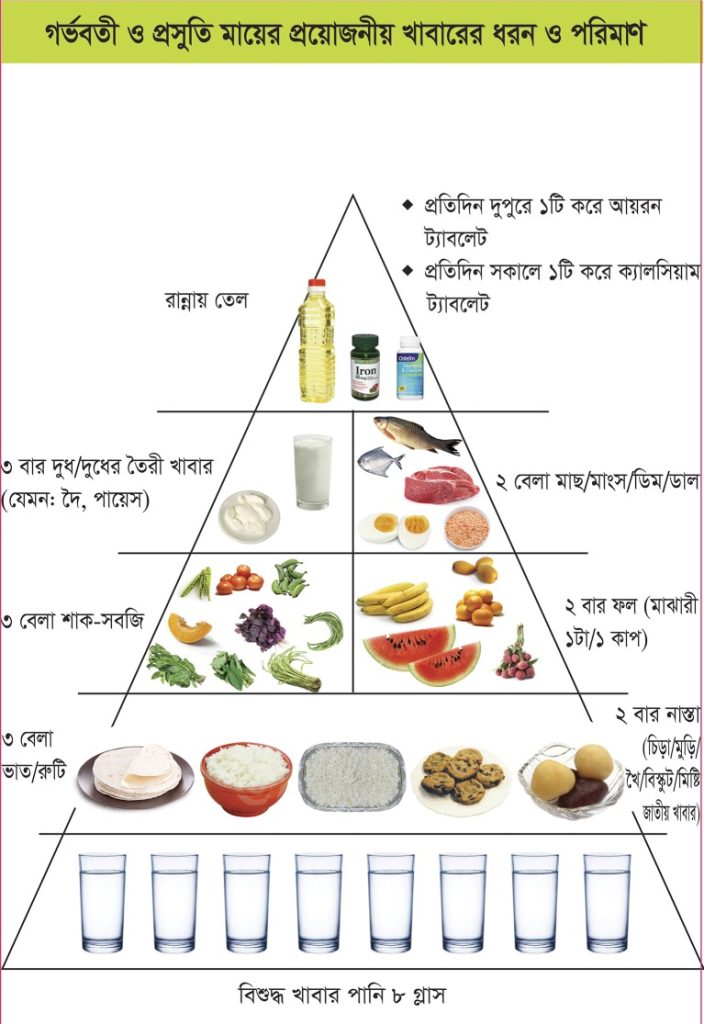
A nutritious diet is one that includes a variety of healthy foods from each food group
- Fruits- Fresh, frozen or dried fruit are all great choices. During mealtimes, half of your plate should contain fruit and vegetables.
- Vegetables- You can eat raw, canned, frozen or dried vegetables. For salads, dark leafy greens are a nutritious choice. During mealtimes, half of your plate should contain fruit and vegetables.
- Grains- During mealtimes, make half of your grain servings whole grains. Whole grains are those that haven’t been processed and include the whole grain kernel. Some examples are oats, barley, quinoa, brown rice and bulgur.
- Protein- It is important to eat a variety of proteins each day. Meat, poultry, beans, peas, eggs, nuts and seeds are all examples of protein-rich foods.
- Dairy- When choosing dairy products, make sure they are pasteurized. Milk and milk products, such as cheese and plain yogurt are good options to choose.
- Oils and fats- Limit solid fats, such as those from animal sources such as duck fat. Healthier fats can be found in other foods, such as some fish, avocados and nuts. Oils in food come mainly from plant sources (such as olive oil and canola oil).
What vitamins and minerals do I need during pregnancy?
The key vitamins and minerals you should make sure you’re getting throughout your pregnancy are:
- Calcium- Calcium is important for building your baby’s teeth and bones – aim for 1,000 mg each day. Some great sources include plain yoghurt, milk, cheese and dark green leafy vegetables.
- Iron- Try for 27 mg of iron every day. Iron helps red blood cells deliver oxygen to your growing little one. You can find it in lean red meat, poultry, peas and beans.
- Iodine- 220 mcg of iodine daily essential for your baby’s healthy brain development. Sources of iodine include dairy products, seafood, meat and eggs.
- Choline- Choline is integral to the development of your fetus’s brain and spinal cord, and you should be getting 450 mg per day. Milk, eggs, peanuts and soy products are good choices to add to your plate.
- Vitamin A- Carrots, sweet potatoes and green leafy vegetables all contain vitamin A, which helps your baby’s bones grow and forms healthy eyesight and skin. 770 mcg a day should be your goal.
- Vitamin C- 85 mg of vitamin C every day helps to promote healthy gum, teeth and bone development. Vitamin C can be found in citrus fruits, broccoli, tomatoes and strawberries.
- Vitamin D- Sunlight, fortified milk and fatty fish such as salmon and sardines all help to provide the 600 international units of vitamin D you should consume every day while pregnant. Vitamin D helps to build your baby’s bones and teeth and helps to promote healthy eyesight and skin.
- Vitamin B6- Vitamin B6 helps your baby to form red blood cells – aim for 1.9 mg a day. Beef, pork, whole-grain cereals and bananas are all good sources of vitamin B6.
- Vitamin B12- The development and maintenance of your little one’s nervous system and the formation of red blood cells are just some of the benefits of vitamin B12. Meat, fish, poultry and milk will help you to reach the recommended 2.6 mcg per day.
- Folic acid- Folic acid is especially important for pregnant women. This B vitamin helps prevent birth defects of the brain and spine and supports the growth and development of the fetus and placenta. Peanuts, dark green leafy vegetables, beans and orange juice will help you toward your goal of 600 mcg per day. However, food alone is not enough to reach 600 mcg daily.
How can I make sure I’m getting enough folic acid?
Because it’s hard to get 600 mcg folic acid from food alone, you should take a daily prenatal vitamin or folic acid supplement with at least 400 mcg to make sure you are getting everything you need. If you are planning a pregnancy, start taking these as soon as possible or as soon as your pregnancy is confirmed. Speak to your healthcare provider to learn more about the right supplement for you.
What foods should I avoid when pregnant?
Pregnant women may be more susceptible to certain food-borne illnesses, which can result in pregnancy complications. During your pregnancy, foods to avoid include:
- Raw, unpasteurized milk and soft cheeses made from unpasteurized milk. These may contain Listeria, a bacteria that can cause an illness called listeriosis.
- Food past its expiration date, as they can contain bacteria.
- Raw and undercooked meat products such as sausages and cold cuts. These can contain parasites like Toxoplasma Gondii or bacteria like Salmonella or Listeria.
- Uncooked fish and seafood as it can contain high levels of bacteria and parasites.
- Some varieties of fish are high in mercury and should be avoided. This includes most predatory fish such as shark, swordfish, marlin and king mackerel.
- Uncooked sprouted seeds, grains and beans. Raw sprouts (such as bean, alfalfa and radish sprouts, as well as ready-to-eat salads) can contain harmful bacteria such as Listeria, Salmonella and E. coli.
- Raw or undercooked eggs, which can carry the Salmonella bacteria.
- Liver and other organ meats. Although the liver is very rich in iron, it is not recommended for a pregnant woman to consume because of its very high content of vitamin A and the potential risk for toxicity.
How do I safely prepare foods while pregnant?
- Wash hands with soap before eating
- Wash all eating utensils thoroughly after use
- Cook meat thoroughly
- Wash uncooked vegetables, salad leaves and fruit carefully before eating
- Store food at the appropriate temperature
- Consume food immediately after cooking
How much more do I need to eat when pregnant?
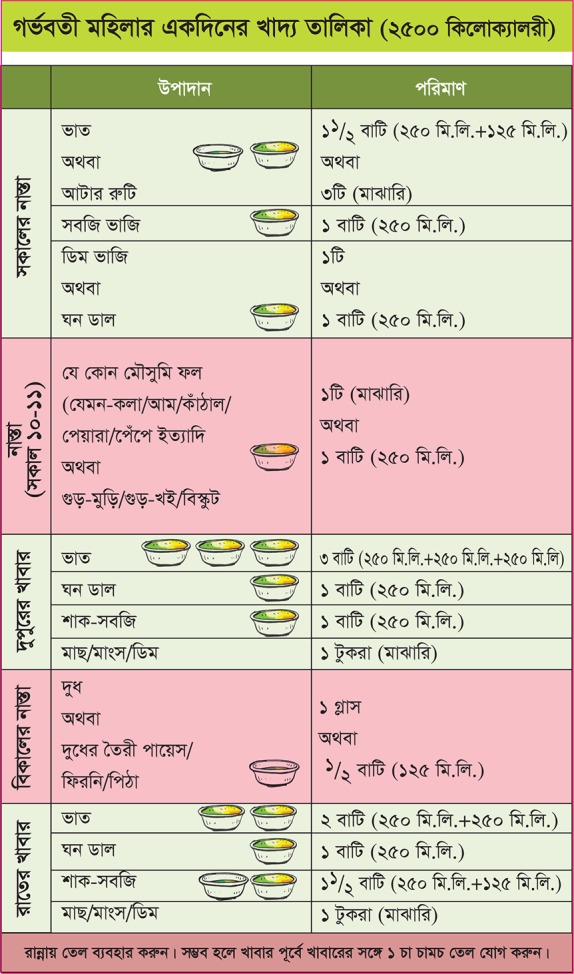
During the first trimester, you don’t need to eat any extra portions. In the second trimester, you will need an extra 340 calories per day, and in the third trimester, about 450 extra calories a day. To get the extra energy you need, try to keep healthy snacks on hand, such as nuts, plain yoghurt and fresh fruit. To find a plan that works for you, speak to your healthcare provider.
Fact source: UNICEF https://www.unicef.org/bangladesh/en/parenting-bd/your-first-trimester-guide