হেপাটাইটিস এ এবং বি
What is Hepatitis A?
Hepatitis A is an acute liver infection caused by the hepatitis A virus that is easily transmissible to others. This viral infection spreads through contaminated food and water or by close contact with someone who has contracted the disease.
It does not cause chronic liver damage like other forms of hepatitis do. Occasionally, though, particularly if one already has liver disease, it may lead to severe illness and liver failure.
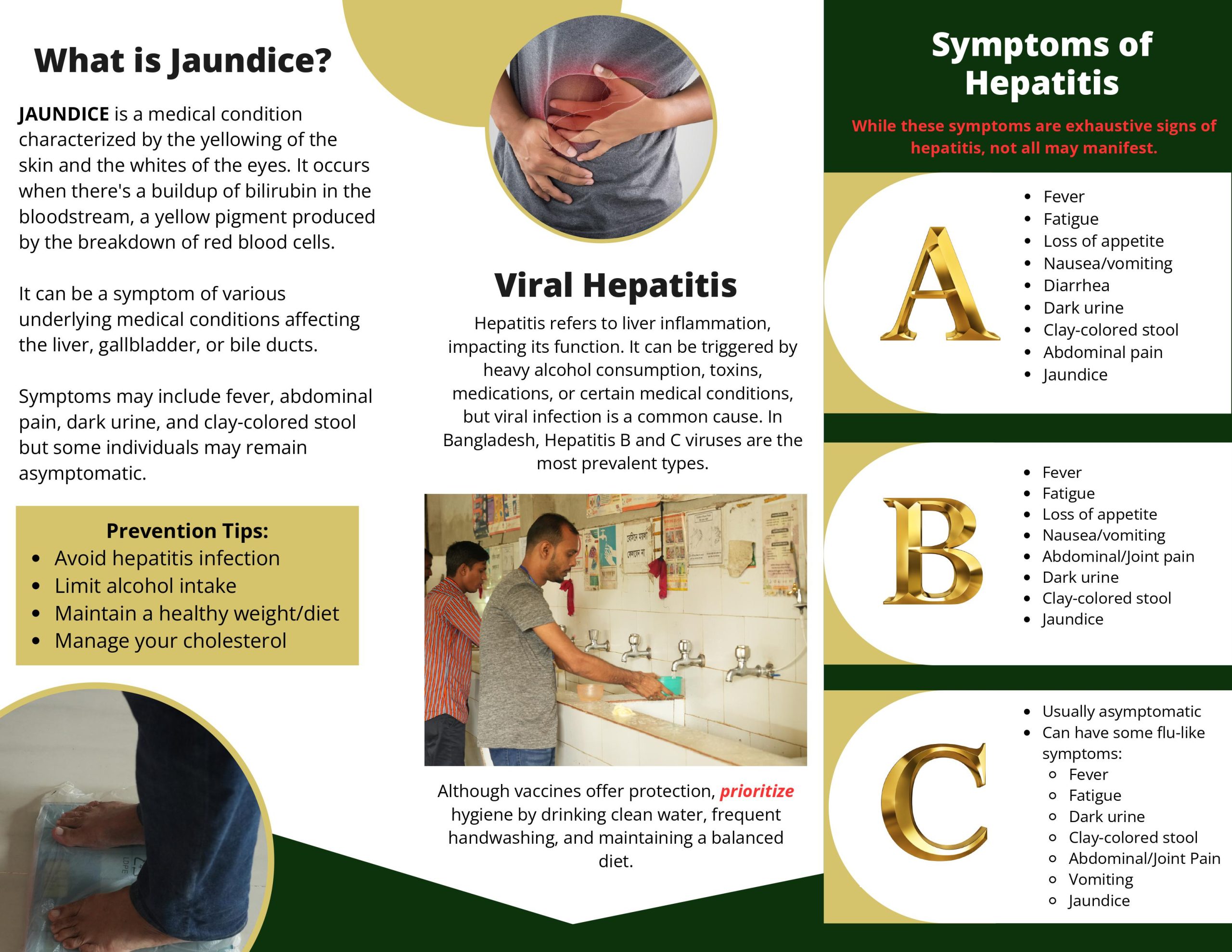
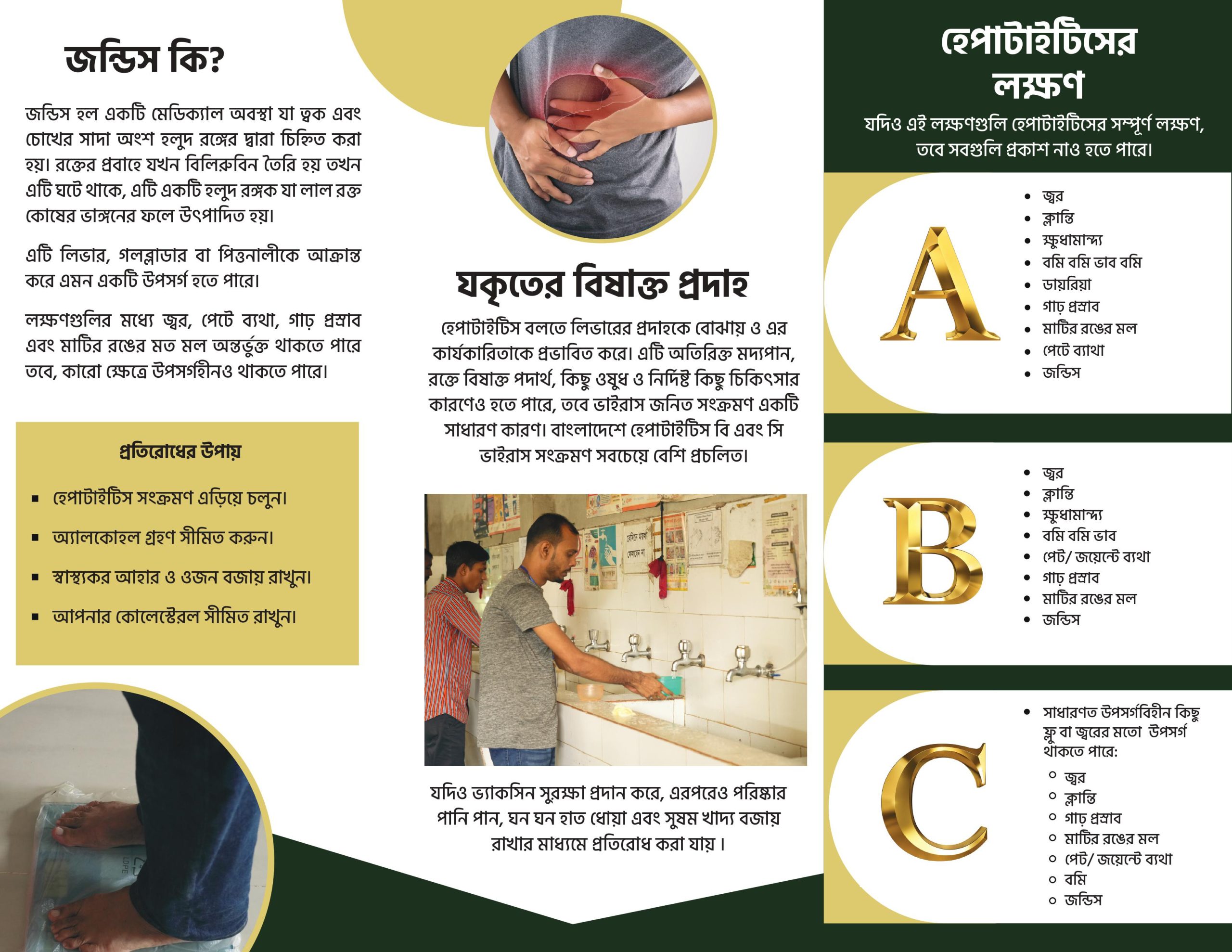
Symptoms of Hepatitis A: Common symptoms in adults include:
- Fatigue and weakness
- জ্বর
- Loss of appetite
- Nausea and vomiting
- Abdominal pain, especially in the upper right side where the liver is located
- Diarrhoea
- Pale or clay-coloured stool
- Dark urine
- Joint pain
- Jaundice – yellowing of the skin and eyes
Who is at Risk for Hepatitis A?
While anyone can get hepatitis A if exposed to the virus, some people are at higher risk. Risk factors include:
- Travelling to countries with high hepatitis A rates
- Caring for someone infected with hepatitis A
- Certain types of sexual contact (like oral-anal sex)
- Recreational drugs orally, and by injections
- Working with primates infected with the hepatitis A virus
- Chronic liver disease
- Weak immune systems
How to Prevent: Immunisation is the best method to prevent hepatitis A. The hepatitis A vaccine is safe and effective, providing long-lasting immunity in 95-100% of individuals.
The CDC endorses routine hepatitis A vaccination for all toddlers starting at age 1. It is also suggested for certain high-risk groups.
Pre-exposure immunisation is ideal for:
- Travellers to nations with intermediate or high hepatitis A prevalence
- Men who engage in intercourse with men
- People who use recreational substances
- People with chronic liver illness
- People with clotting element abnormalities
- People who interact with hepatitis A infected primates or in hepatitis A research facilities
In case of exposure to hepatitis A, post-exposure prophylaxis is advised within 2 weeks of contact. This involves either:
A dose of the hepatitis A vaccine: An injection of hepatitis A immune globulin, which provides short-term protection
Along with immunisation, practising good hygiene and sanitation can help prevent hepatitis A spread:
- Wash hands with soap and water after using the restroom, changing diapers, before eating/preparing food
- Cook food thoroughly, wash fruits/vegetables
- Use bottled water when travelling
- Practise safe intimacy by using prophylactics
- Do not share hypodermic needles or toothbrushes
- Disinfect surfaces with a bleach-based solution
How Hepatitis B spreads, what are the symptoms and how can we prevent it?
Let’s know the details from Dr. Mohammad Nazmul Haque, former Assistant Professor and Head of Department (Department of Liver, Digestive and Pancreatic Diseases) at Bardem (Diabetic) General Hospital.
Hepatitis B is a liver disease caused by the hepatitis B virus. These infections can be acute (short and severe) or chronic (long term). Hepatitis B virus is called the silent killer and its prevalence in Bangladesh is quite noticeable.
How does hepatitis B spread?
Hepatitis B virus can spread through various body fluids such as blood, saliva, vaginal fluid and semen.
In our country this disease spreads more through injection. It is more common among people who take drugs. Because they use the same needle many times or repeatedly. In some cases also through blood transfusion. But it has reduced a lot now.
A child can get hepatitis B if the parents have it. Especially if the mother has it, it can happen to the child. Can be through organ donation. May be by tattooing the body. It can also be transmitted through surgical procedures and can also be transmitted through sexual intercourse.
Hepatitis B can be prevented with a safe and effective vaccine. A booster is usually given a few weeks after birth. It provides almost 100 percent protection against viruses.
2 billion people (1 in 3 people) are infected with the disease and about 300 million people live with chronic hepatitis B infection. Up to 1 million people die each year from hepatitis B, although it is a preventable and treatable disease.
Symptoms of hepatitis B
Most people do not experience any symptoms when newly infected. These symptoms usually appear about 1 to 4 months after infection. For many people, usually young children may have no symptoms.
Common signs and symptoms of Hepatitis B are-
- Abdominal pain
- Dark urine
- জ্বর
- Joint pain
- Loss of appetite
- Nausea and vomiting
- Weakness and fatigue
- Yellowing of the skin and whites of the eyes, commonly known as jaundice
- If the hepatitis B virus becomes severe or severely affects the liver, the patient may die
Hepatitis B is preventable
Hepatitis B is a deadly virus but can be prevented by vaccination. In Bangladesh since 2003-5, hepatitis B virus vaccination has been provided free of charge along with other diseases through the EPI vaccine schedule after birth. Apart from this, even adult people can get vaccinated against this virus at any age. A total of 3 doses of the vaccine at 0, 1 and 6 months can prevent the attack of this disease. It is mandatory to undergo some tests as per doctor’s advice before vaccination. Through these tests, it is seen whether the virus has attacked before and whether the body has already developed antibodies against the disease or not. Once infected with this virus, there is no opportunity to get vaccinated.
Fact source: Daily Star
https://bangla.thedailystar.net/life-living/food-health/news-509136